A sound roof with one isolated fault can often be repaired. A roof with widespread deterioration, failing underlay and repeated leaks may cost less in the long run to replace properly. The key is to judge the whole roof—not just the damp patch indoors.
When a roof repair is usually the sensible option
A targeted repair is often appropriate when the surrounding roof is otherwise serviceable and the cause can be identified clearly. Examples include:
- A small number of slipped, cracked or missing tiles or slates
- Localised damage around a chimney, valley, vent or roof junction
- A limited flashing or leadwork defect
- Storm damage confined to one section
- A gutter or roofline fault that is being mistaken for a roof leak
The aim should be to fix the cause, not simply cover the visible symptom. Water can travel along timbers or underlay before it appears inside, so the internal stain is not always directly below the defect.
Signs a full re-roof may make more sense
Replacement becomes more likely when the problem is widespread or the roof build-up beneath the tiles has reached the end of its useful condition. Warning signs include:
- Leaks returning in different places after several repairs
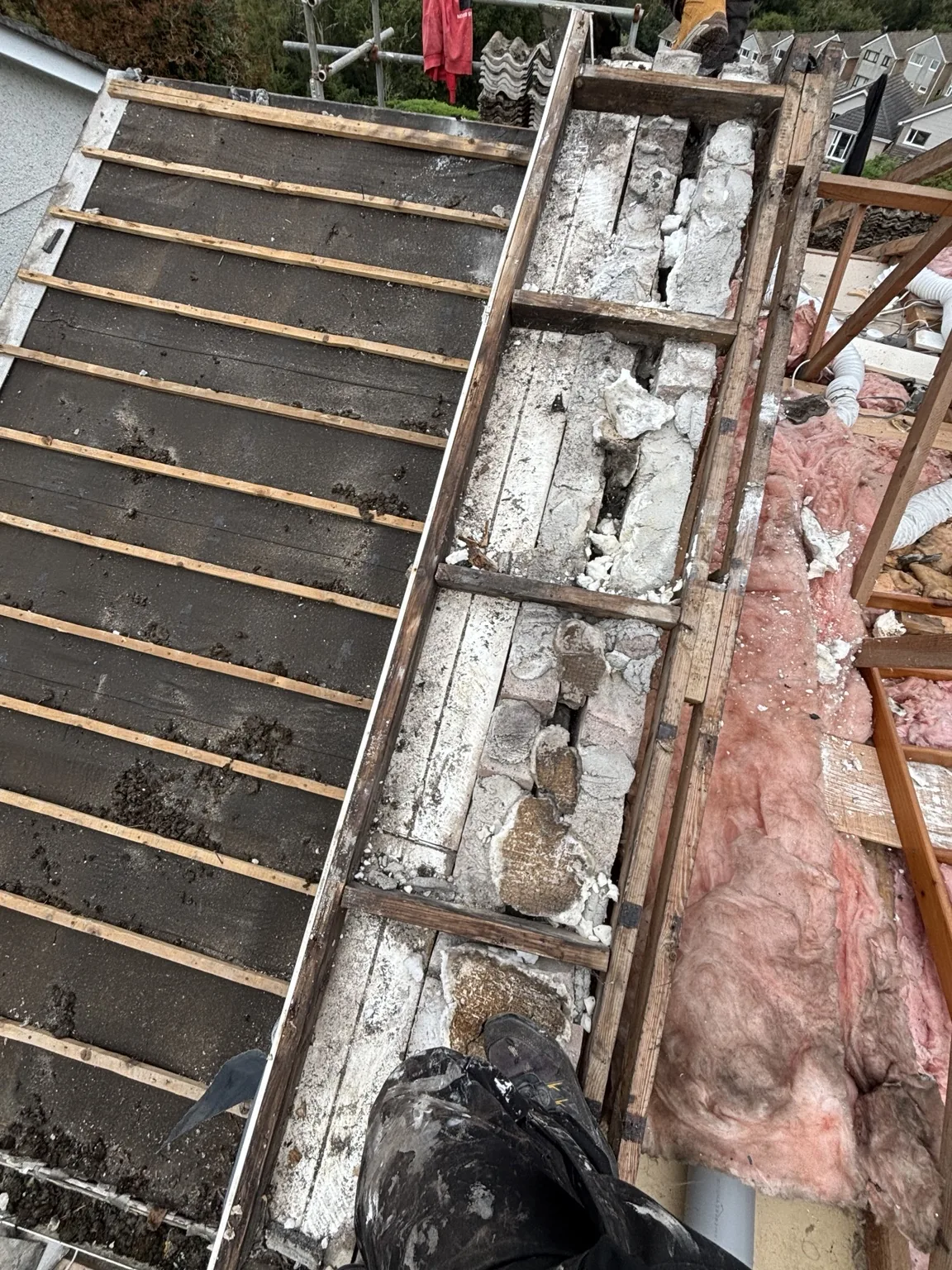
- Brittle, torn or badly deteriorated underlay across large areas
- Widespread tile or slate failure rather than one isolated patch
- Large areas of failing mortar at ridges, verges or junctions
- Significant sagging, movement or timber concerns that need opening up
- The cost of repeated temporary work is becoming difficult to justify
A re-roof allows the covering to be removed so the structure can be seen, the weatherproof layer renewed and new battens fitted where required. Depending on their type and condition, some existing tiles or slates may be suitable for careful re-use; others may need replacing.
Five questions to ask before deciding
1. Is the fault isolated?
If the problem is confined to one detail and the surrounding materials are in fair condition, repair is often the proportionate choice.
2. Are leaks becoming repetitive?
Several unrelated leaks can indicate that the roof is failing more generally. Continuing to patch individual symptoms may not address the wider cause.
3. What is happening beneath the covering?
Tiles and slates shed most rain, but the underlay, battens, flashings and junctions also matter. A roof can look reasonable from the road while older materials beneath are deteriorating.
4. Will the work last?
Ask what is being repaired, what will remain untouched and what guarantee applies to the quoted work. A cheaper patch is not better value if the same area is likely to fail again quickly.
5. What does the complete quotation include?
For replacement work, check the scope for scaffolding, strip-out, waste removal, membrane, battens, roof covering, ridges, verges, leadwork and making good. Clear scope makes quotations easier to compare.
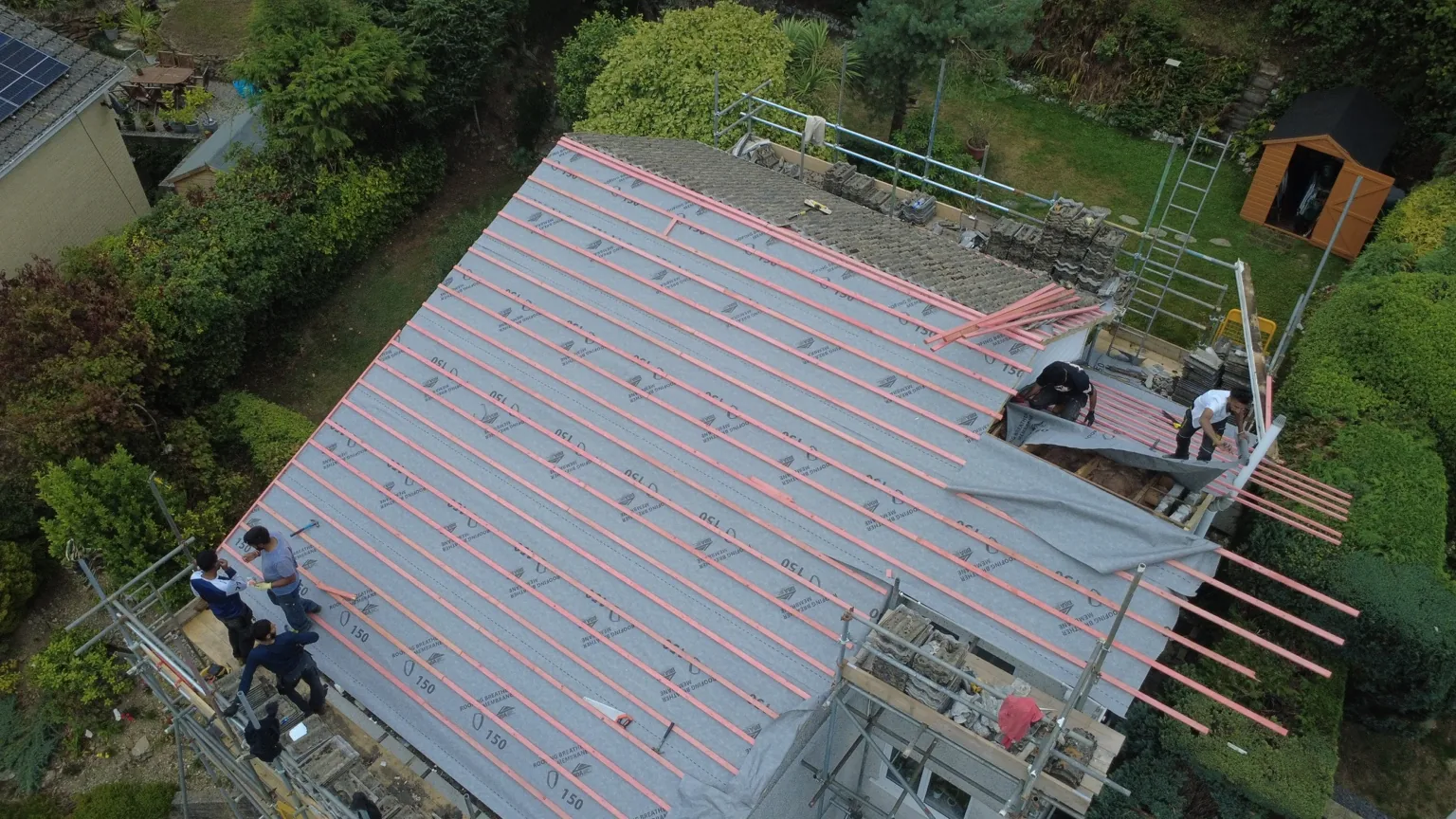
Once the old covering and underlay are removed, the roof can be checked before new breathable membrane and treated battens are installed.
Start with evidence, not assumptions
Useful first evidence includes clear external photos from ground level, pictures of any internal staining and a note of when the leak appears. A closer inspection may still be needed, but these details help separate an obvious local defect from a wider roofing problem.
Do not climb onto the roof yourself. Wet, mossy or damaged coverings can be fragile and slippery.
How Shield Roofing can help
Shield Roofing handles both roof repairs in Plymouth and complete re-roofing. We can inspect the problem, explain the practical options and quote for the work that makes sense for the condition found.
For a real example, see our Plymouth tile re-roof and dry-ridge project from strip-out through to completion.