
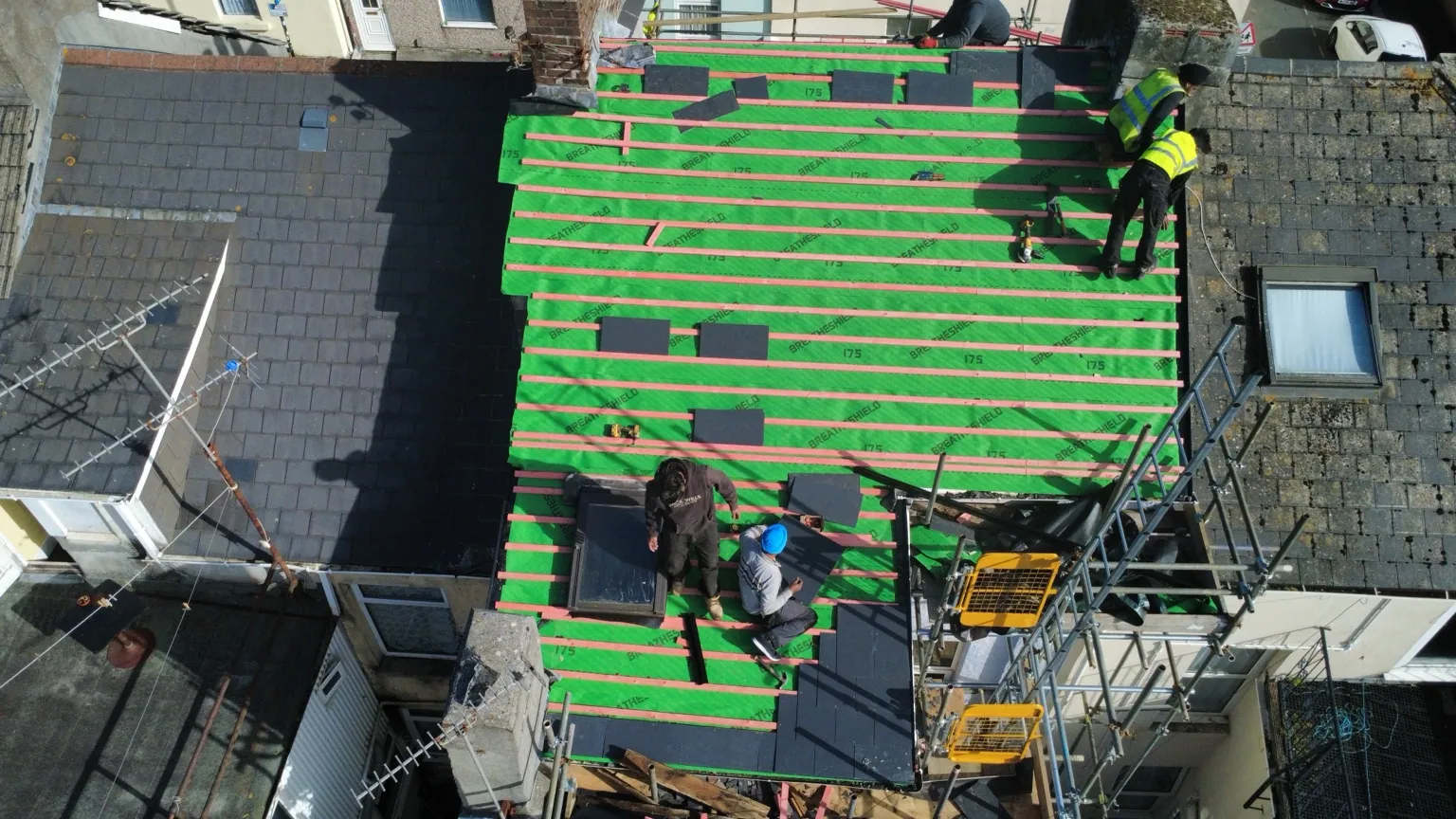
A leak that only shows up during driving rain does not always originate directly above the damp patch indoors. Here is a practical way to assess the problem without taking risks on the roof.
Make the area safe
Keep away from wet electrical fittings and isolate the affected circuit if it is safe to do so. Catch dripping water where possible and protect valuables. If water is near electrics, a ceiling is bulging or structural damage is suspected, seek urgent professional help.
Record where and when it leaks
Photograph the water marks and note whether the leak starts during heavy rain, a particular wind direction or long after the rain has stopped. Those details help distinguish possible tile, slate, flashing, valley or gutter problems from condensation.
Look from the ground, not from the roof
Missing slates, displaced ridge tiles, overflowing gutters or damaged flashing may be visible from a safe position. Do not walk on the roof or use ladders in wet, windy conditions. Roof access and diagnosis are jobs for someone with appropriate precautions and equipment.
Why the entry point can be misleading
Water can track along battens, rafters or the underside of coverings before it becomes visible indoors. It may enter at a chimney, valley or roof window some distance from the damp patch. A professional inspection can investigate the path rather than simply treating the nearest tile.
Repair or wider replacement?
A small local defect may call for a repair. Repeated leaks, failing felt, extensive deterioration or several weak areas may justify a broader review. The correct decision depends on the condition of the roof as a whole and the expected service life of the materials.
Need help with your roof?
Tell us what work you need and where the property is. We can discuss the next step and provide a written quotation.